HGV Cleaning Guide
Keeping an HGV clean is an effort that’s well worth the investment. After all, drivers have to spend long hours in their HGVs, working and often effectively living in the vehicle, too.
Jump to section:
- Benefits of keeping HGVs clean
- How to clean the inside of your HGV
- How to clean the outside of your HGV
So, cleaning these vehicles is one of the most effective ways that you can support your staff. But, it’s not easy to keep on top of HGV cleaning when they’re always out in use!

With a comprehensive HGV and lorry cleaning schedule in place, you can keep on top of this important task, and thereby ensure your team feels happy, comfortable, productive and focused.
Keep reading to find our HGVs Cleaning Guide, in which we cover everything from regular tasks and interior maintenance, to best practices for cleaning vehicles’ exteriors.
What are the benefits of keeping HGVs and lorries clean?
- Supporting the mental health and wellbeing of your team
- Ensuring you are attaining the health and safety standards
- Maintaining full compliance with all relevant regulations (including DVSA standards)
- Enabling your drivers to do their jobs more efficiently
- Extending the lifespan of your vehicles
- Minimising the risk of debris or grime causing corrosion or other vehicle damage
- Minimising the spread of viruses amongst your team
- Ensuring maximum visibility (with regular cleaning of the vehicles’ mirrors and windows)
- Enhancing your business’s brand image, demonstrating your trustworthiness and professionalism
- Demonstrating to your customers your commitment to the highest quality standards
- Securing the highest levels of employee satisfaction
How to clean the interiors, cabins and trailers of HGVs and lorries
Firstly, let’s take a look at the routine maintenance and interior cleaning steps that you should be following.
To keep HGVs clean and in good working order, you should complete the following on a weekly basis (for vehicles that are in regular use):
- Rubbish
Dispose of any clutter or rubbish inside the vehicle
- Storage
Empty out any storage space in the vehicle (disposing of anything that is not needed)
- Seasonal Items
Remove and store anything that you know won’t be needed for the next few months (de-icer being a common example)
- Floor Mats
Remove the mats from the vehicle, and beat them to remove any loose bits of debris. Then, vacuum the mat to remove any remaining dirt, dust or debris.
- Seats
While the mats are still out of the vehicle, vacuum the seats and then the entirety of the floor (including under the seats and pedals). Wash the seats with warm water, fabric cleaning solution and a sponge (paying close attention to any stains). Spray the seats with a fabric refresher.
- Sleeping Area
If the vehicle has a sleeping area, strip the bed and wash the bed linen. Allow the mattress to air, before spraying it with a fabric refresher and re-making the bed.
- Windows
Clean the windows and mirrors using a window cleaner and a cloth.
- Dashboard
Clean the console and the dash. We recommend using antibacterial wipes for this, as it ensures the area is completely clean, without risking getting electrical equipment wet.
- Steering Wheel, Buttons & Door Handles
Disinfect any other key commonly used areas, such as the steering wheel, door handles and cup holders.
One of the most popular products in the Alpha Power Cleaners range is our commercial vacuum cleaners.
These state-of-the-art commercial cleaning machines are ideally suited to help you with this process. By using commercial vacuum cleaners, you can ensure this process is completed as efficiently, easily and effectively as possible. What’s more, this specialist equipment can pick up far more debris and dirt than a normal vacuum cleaner can handle. As a result, these commercial vacuum cleaners will help keep your equipment cleaner, for longer.
How to clean the outside of HGVs and lorries
Firstly it’s imperative that, if you are cleaning an HGV or lorry, the correct PPE is worn. Although this might sound a bit excessive for ‘just cleaning’, using equipment like pressure washers without protective clothing can be dangerous (and isn’t worth the risk!).
So, for cleaning HGVs or lorries, we recommend the following PPE:
- Waterproof clothing and boots
- Eye protection
- Helmet
- Safety gloves
Then, once you’ve donned the right equipment, the process for cleaning an HGV is as follows:
- Wash the entire exterior of the vehicle with water, using a pressure washer (more details on this below).
- Focus the jet washer on any more stubborn areas of dirt or grime, which the initial wash-over wasn’t able to remove. Common examples include the areas around the tyres.
- Prepare a detergent solution (following the manufacturer’s instructions) and apply it to the vehicle’s exterior. Allow to sit for around 30 minutes – 1 hour.
- Wash away the detergent using a pressure washer.
- Use a large squeegee to remove any excess water from the vehicle, then allow the rest to air dry.
Alpha Power Cleaners offers two types of commercial cleaning machines to assist with this process: mobile pressure washers and static pressure washers (we suggest using our cold pressure washers for vehicle cleaning).
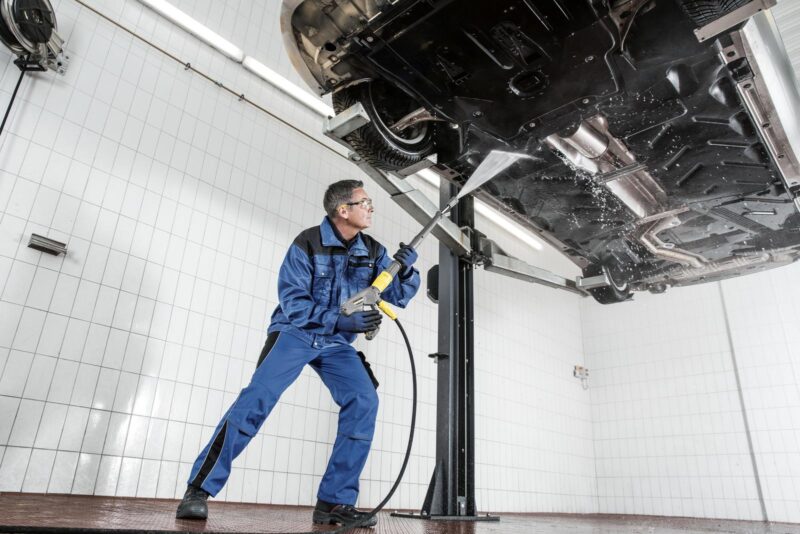
With our range of advanced pressure washers at your disposal, you can be sure to get the best results.
Alpha Power Cleaners are commercial cleaning specialists, offering cleaning equipment to suit all businesses and use cases.
These include vacuum cleaners, mobile pressure washers and static pressure washers, available to hire with a range of contract types available.
So if you have any further questions about effective HGV or lorry cleaning, or how our cleaning equipment can enhance your cleaning schedule, don’t hesitate to get in touch.